Konrad Sejer—Johnny Beskow
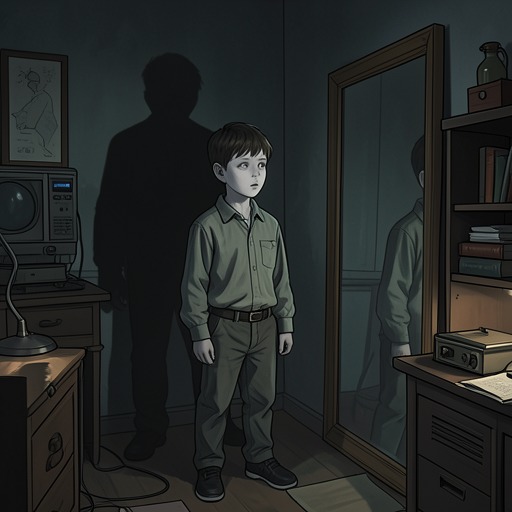
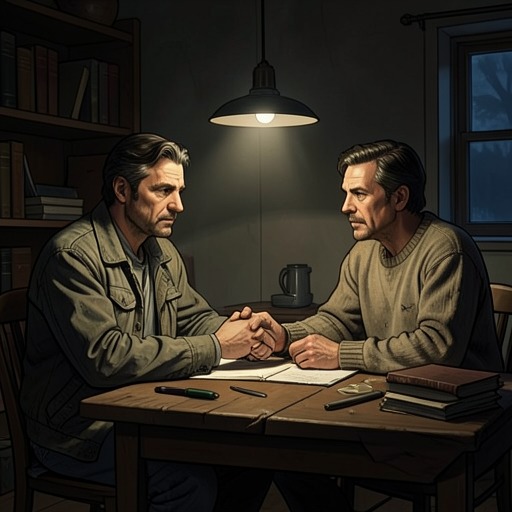
The CallerKonrad Sejer and Johnny Beskow begin as detective and delinquent suspect, but their repeated conversations become something less formal and more intimate: a cautious bond shaped by accountability, loss, and care. Sejer does not mistake Johnny’s admission that frightening people was fun for harmlessness; he insists that the pranks hurt people badly. Yet he continues to make time for the boy, and Johnny, who has lost the person who mattered most to him, eventually accepts Sejer in the role of a kind of grandfather. Their connection never erases the investigation. It makes the investigation personal.
From Suspect to Regular Visitor
Johnny is a minor, so he cannot be held in custody. Instead, he must report to the police station three times a week, and he arrives punctually each time. After checking in at the front desk, he goes directly to Sejer’s office. A procedure meant to keep the young suspect under supervision thus becomes the structure for their regular meetings.
In those early conversations, Johnny puts all his cards on the table about the intimidation campaign: he admits that scaring people senseless had been fun, but insists he regarded it as a game and never meant to hurt anyone. Sejer answers sternly that the harm was real and perhaps lasting, even if Johnny is too young to understand its consequences yet. He then asks about Johnny’s life with his mother at Askeland. Johnny grows morose and says she is never sober and takes it out on him. Sejer acknowledges that this is unfair, but immediately asks whether Johnny has been fair to the people he frightened, including Gunilla Mørk, Astrid and Helge Landmark, Frances and Evelyn Mold, and Karsten and Lily Sundelin. Sympathy, in Sejer’s hands, does not become an excuse.
The Investigation Between Them
Their conversations remain anchored in the unresolved death of Johnny’s grandfather. When Sejer presses him about the food his mother brought, Johnny says she had always been after his grandfather’s money and redirects the suspicion toward her. Sejer later tells Johnny that there is no reason to believe she expected money or a house: she is not named as a beneficiary in the will, whereas Johnny is. The exchange places their growing rapport beside a sharp conflict of interest. Sejer is a source of attention and comfort, but he is also the detective testing Johnny’s claims and pursuing the truth about his grandfather.
Johnny’s skull-patterned gloves make that tension visible. After Johnny sets them on his lap, Sejer recognizes them and tells him that he slipped through their fingers. The remark recalls the gap between their roles: Sejer has been trying to catch him, while Johnny has been withholding or redirecting information. The gloves are not proof of affection or reconciliation; they are a reminder that Sejer’s warmth does not mean he has stopped investigating.
Care, Suspicion, and a Father Figure
Because Johnny must keep reporting, the meetings continue, and their manner toward each other softens. Sejer occasionally buys simple food and warms it in the microwave, apologizing that Johnny will have to make do with frozen dinners because he is a terrible cook. Johnny calls him Grandpa and acknowledges that he is good at warming meals. The exchange is teasing and domestic, a marked contrast with the police-station routine that first brought them together.
But Johnny tests the meaning of Sejer’s kindness. While eating, he asks whether the attention is part of a plan to make him confess more, and says he will not walk into that trap. His suspicion remains active even as he accepts the food. Sejer answers that he is feeding Johnny only because the boy is too skinny. The modest explanation makes care tangible without turning it into a tactic or a grand declaration. Their closeness develops through repeated, ordinary acts, while Johnny remains alert to the possibility that he is being managed.
An Unfinished Trust
Sejer comes to like Johnny in a quiet way and is willing to be a father figure to a delinquent boy who has lost the only person who meant anything to him. The relationship is not presented as a clean conversion from distrust to confidence: Johnny still questions Sejer’s motives, and Sejer still has difficult questions to ask. Their bond instead gives those questions a continuing human setting. Sejer insists that Johnny face the damage he caused, while also listening to the account of an unfair home life; Johnny accepts Sejer’s presence without surrendering his guardedness.
The grandfather’s death keeps the relationship open-ended. Sejer says they must get to the bottom of what happened and prepares Johnny for many long conversations, emphasizing that the matter has to be handled properly. Johnny’s concern turns to his mother: he asks what will happen to her and whether a conviction would mean she is disinherited, then asks whether that would make him happy. Sejer’s question leaves Johnny’s feelings unsettled rather than supplying an easy answer. Their emerging trust therefore rests not on a solved investigation or a final reconciliation, but on Sejer’s continued attention and Johnny’s willingness to return, talk, and ask what comes next.